SOURCED WITH THANKS TO THE UNITED NATIONS

GOAL 1: NO POVERTY

IT'S WITHIN OUR REACH

can WE ACTUALLY ACHIEVE THIS GOAL?

YES WE CAN

To end extreme poverty across the world in two decades, the economist Jeffrey Sachs calculated that the total cost per year would only be about $175 billion a year. 

Goal 1: End poverty in all its forms everywhere

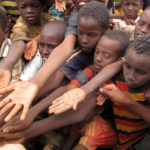
More than 700 million people, or about 10% of the world population, still live in extreme poverty and are struggling to fulfil the most basic needs like health, education, and access to water and sanitation, to name a few. The majority of these people living on less than $1.90 a day, live in sub-Saharan Africa. Worldwide, the poverty rate in rural areas is 17.2 per cent—more than three times higher than in urban areas.
 
Having a job does not guarantee a decent living. In fact, 8 per cent of employed workers and their families worldwide lived in extreme poverty in 2018. Poverty affects children disproportionately. One out of five children live in extreme poverty. Ensuring social protection for all children and other vulnerable groups is critical to reduce poverty.
 
Poverty has many dimensions, but its causes include unemployment, social exclusion, and high vulnerability of certain populations to disasters, diseases and other phenomena which prevent them from being productive. Growing inequality is detrimental to economic growth and undermines social cohesion, increasing political and social tensions and, in some circumstances, driving instability and conflicts.

OVERCOMING POVERTY IS NOT A TASK OF CHARITY, IT IS AN ACT OF JUSTICE. LIKE SLAVERY AND APARTHEID, POVERTY IS NOT NATURAL.

It is man-made and it can be overcome and eradicated by the actions of human beings. Sometimes it falls on a generation to be great. YOU can be that be that great generation. Let your greatness blossom.”

Nelson Mandela

"AS LONG AS POVERTY, INJUSTICE AND GROSS INEQUALITY PERSIST IN OUR WORLD, NONE OF US CAN TRULY REST.

NELSON MANDELA